19-05-2026 A safety incident rarely results from a single error or poor decision. It often arises from a combination of technical, human, organisational and contextual factors that only become clear afterwards. A thorough incident analysis is therefore essential. Its purpose is to understand how the existing system allowed the incident to happen and keep the investigation focused on learning instead of blame.
A structured root cause analysis (RCA) looks beyond the immediate trigger to uncover underlying causes, assumptions and barriers that failed or were missing.
19 May 2026 · Jan Willem Vernhout & Ron Vonk
Co-founders of
CoThinkExplore the Root Cause Analysis for HSE training course.This white paper shows how organisations can investigate safety incidents thoroughly and use the findings to learn and improve. We draw on the RCA methods developed by
CoThink, which focus on identifying and mapping the full evidence-based chain of cause and effect, including the causes of human error.
Turning these insights into lasting improvements requires effective measures, clear ownership, changes to processes and behaviour, and a culture in which people share lessons, act on them and embed them in everyday work.
What Is a Safety Incident?
A safety incident is an unwanted event or situation that did or could have compromised the safety of people, equipment, processes, the environment or the organisation. It includes incidents involving injury or damage, as well as near misses, high-potential incidents, unsafe conditions and process deviations that could have had more serious consequences under different circumstances. This broad definition matters because organisations can learn from actual failures and from warning signs that reveal where the system is vulnerable and why harm was narrowly avoided.
Why Safety Incident Analysis Matters
Analysing safety incidents is essential because they often reveal vulnerabilities that go unnoticed in day-to-day work. An incident, near miss or unsafe condition can show where assumptions were wrong, barriers were ineffective, procedures did not reflect actual working conditions or risks played out differently than expected. Looking at what happened and asking how and why it could happen helps explain how the system behind the incident actually works.
This analysis helps prevent recurrence and supports wider learning. Without a thorough investigation, organisations often resort to quick fixes, additional instructions or corrective conversations with individuals. These responses may seem reasonable in the short term, yet rarely lead to lasting improvement. A good incident analysis is the first step in identifying causes, patterns and failed controls, so organisations can choose targeted, effective measures and embed them in practice.
The depth of the analysis should reflect the incident. A brief review and immediate correction may be enough for a minor deviation, while a serious or potentially serious incident calls for a thorough root cause analysis. Consider the actual outcome alongside the potential consequences, the likelihood of recurrence, uncertainty about the causes and any evidence of barrier failure.
Start by classifying the incident carefully. Did it involve damage or injury? Was it a near miss, a high-potential incident, an unsafe condition or a general process disruption? The classification helps determine the appropriate method, investigation questions, people and expertise to involve, and how decisions will be made. This gives early warning signs due attention and keeps straightforward investigations proportionate.
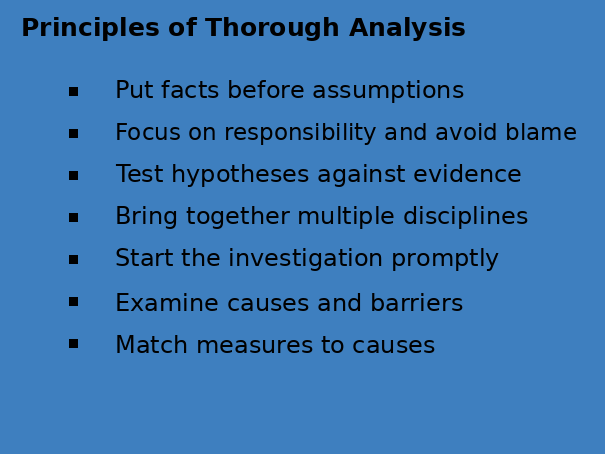
Principles of Thorough Incident Analysis
A good incident analysis starts with a few essential principles. They determine whether the investigation produces insights that lead to improvements or simply reconstructs the event and reaches obvious conclusions. In safety investigations, work promptly and objectively, ground the analysis in facts, and pay attention to the people involved and the wider context in which the incident occurred.
Put Facts Before Assumptions
Every good incident analysis starts with a clear picture of the facts. What happened, when and where did it happen, what were the conditions, and who was involved? Distinguish between established facts, observations, assumptions and interpretations. Explanations often emerge quickly. ‘The procedure wasn’t followed’, ‘People weren’t paying enough attention’ or ‘Communication was poor’ may all be relevant, but each needs evidence. Starting with the facts keeps first impressions and existing beliefs from steering the analysis. Being transparent about the facts also reduces disputes and helps people support the findings.
Focus on Responsibility and Avoid Blame
Learning from incidents requires an environment where people can speak openly about what happened. An investigation centred on blame can make people defensive, produce incomplete or misleading information and cost the organisation opportunities to learn. Responsibility still matters. A thorough analysis clarifies where responsibilities, decisions, working conditions and controls fell short. It uses those findings to identify where improvements are possible.
Test Hypotheses Against Evidence
Several possible explanations often emerge during an incident analysis. They might include insufficient instruction, a technical fault, time pressure, incorrect information or a combination of these factors. Treat each explanation as a hypothesis and test it against the facts. What evidence supports it? What contradicts it? What information is still missing? Explicitly testing hypotheses helps prevent assumptions, first impressions or strongly held opinions from being accepted as causes without evidence.
Bring Together Multiple Disciplines
Safety incidents have multiple causes. Technology, behaviour, procedures, planning, maintenance, design, training, leadership and organisational culture can all play a part. Involving people with different expertise and perspectives makes the analysis more complete. Operators, managers, maintenance staff, HSE professionals, engineers and process specialists often see different aspects of what happened. Bringing those perspectives together helps the team look beyond obvious causes and ask about the context and conditions that made the incident possible.
Start the Investigation Promptly
Start the incident investigation as soon as possible to preserve information. Memories fade, normal operations resume, data can be lost and physical evidence disappears. Collect facts and document the scene promptly, then take the time needed to analyse the evidence and draw sound conclusions. Speed matters most when gathering evidence. Care is paramount when analysing it.
Examine Causes and Barriers
An incident occurs when something goes wrong and the controls in place fail to prevent it or limit its impact. Examine the immediate and underlying causes as well as the breached barriers. Which technical, organisational or human measures should have prevented, detected or mitigated this scenario? Were those barriers in place, known to the people involved, available, usable and effective? They were put in place to prevent deviations, so people rely on them. Understanding how barriers failed or why they were missing often shows where risk controls can improve.
The long-term value of an incident analysis depends on the quality of the measures it produces. If the investigation finds an unclear procedure, simply repeating the instructions is often insufficient. If workload, design, planning or supervision contributed, the measures need to address those factors too. Effective measures are easy to trace back to the actual deviations and conditions. They are practical, have a clear owner and can be tested for effectiveness. What matters is being able to show that the risks are better controlled than they were before the incident.
Investigation Approach
Several frameworks describe the stages of incident investigation, including ISO 45001, OSHA guidance and HSG245. The steps below draw on these frameworks and years of practical experience. Each step is described in more detail in the sections that follow.
Preparation1. Define the investigation brief and depth
2. Assemble an independent, multidisciplinary investigation team
Investigation and analysis3. Gather the facts promptly and thoroughly
4. Reconstruct the sequence of events
5. Analyse the full chain of cause and effect and the contributing conditions
6. Assess how controls and barriers performed
Improvement7. Develop measures that demonstrably address the causes
8. Create an action plan with owners, deadlines and priorities
Reporting and communication9. Report clearly and factually to support learning
10. Share lessons and embed learning across the organisation
Follow-up11. Verify implementation and effectiveness
Secure the Scene and Manage the Initial Response
The first priority is to prevent further harm. Arrange medical assistance, evacuate as needed, make equipment safe, cordon off the area and preserve evidence. Record the emergency measures taken at the same time. This lays the groundwork for a reliable investigation and helps prevent the investigation itself from introducing new risks.
1. Define the investigation brief and depth
Match the investigative effort to the incident. Use its severity, potential consequences, likelihood of recurrence and applicable legal obligations to decide whether it warrants a limited investigation, a formal analysis or a full root cause analysis. For a full RCA, define the scope as well. Decide whether to examine the causes that led to the incident alone or to review the response and follow-up as well, so the organisation can learn from those stages too.
2. Assemble an independent, multidisciplinary investigation team
An effective investigation draws on expertise from operations, engineering, safety, management and employees or their representatives. For major incidents, appoint an independent facilitator.
3. Gather the facts promptly and thoroughly
Gather information about what happened before, during and after the incident. Sources include interviews, photos, process data, logs, procedures, maintenance and training records, work permits and physical evidence. Keep facts, assumptions and interpretations clearly distinct. A visual record of the evidence can help.
4. Reconstruct the sequence of events
Build a timeline showing the sequence of events, decisions, conditions and deviations. This helps the team avoid settling prematurely on a single cause. The reconstruction should make clear what is known, what remains uncertain and what further information is needed.
5. Analyse the full chain of cause and effect and the contributing conditions
Examine the chain of causes leading up to the incident and the chain of consequences that followed. Identify the circumstances that contributed to or enabled that sequence. As noted earlier, safety incidents have multiple causes.
6. Assess how controls and barriers performed
Identify the preventive measures, including detection measures, and the mitigating measures that were in place, and determine which failed. Consider technical as well as organisational barriers, including training, supervision, competence, maintenance and procedures.
7. Develop measures that demonstrably address the causes
Link each measure to an established cause or a failed barrier. Avoid generic measures such as ‘pay more attention’ or ‘repeat the instructions’ when they leave the underlying system issue in place.
8. Create an action plan with owners, deadlines and priorities
Record who owns each measure, when it is due, what resources are needed and how effectiveness will be checked. Follow-up is what turns the findings in the report into safety improvements.
9. Report clearly and factually to support learning
Describe the facts, analysis, conclusions and measures. Avoid loaded language and personal accusations, except where there is clear evidence of a deliberate breach or negligence. In that case, consider the implications and whether transparent reporting is possible. Making legal judgements is outside the purpose of the investigation.
10. Share lessons and embed learning across the organisation
Share the findings with relevant teams and management and, where appropriate, with other sites exposed to similar risks. Incident investigations help organisations learn and recognise recurring patterns. Sharing those lessons helps prevent the same causes from triggering incidents elsewhere.
11. Verify implementation and effectiveness
Check that the measures have been implemented and have had the intended effect. Use audits, observations, performance indicators, trend analyses or risk reassessments. Close the investigation once the organisation can demonstrate that the likelihood of recurrence or the severity of the consequences has decreased.
From Analysis to Effective Improvement Measures
The value of an incident analysis ultimately depends on what the organisation does with its findings. Even a sound analysis can have little effect if the measures are too general, lack firm commitments or are poorly linked to the identified causes. For each measure, explain which risk it reduces, which cause or failed barrier it addresses and how the organisation will know whether it works.
Distinguish between corrective and preventive measures. Corrective measures fix what went wrong or restore a safe state. Preventive measures aim to prevent recurrence by making lasting improvements to design, working practices, planning, maintenance, supervision or decision-making. Temporary controls may also be needed, especially when the risk must be reduced immediately while a long-term solution is being developed.
Effective measures address the system conditions that allowed the incident to occur. Additional instruction, communication or training can help, but its effect is often limited when the underlying conditions remain the same. If workload, unclear interfaces, inadequate tools, conflicting priorities or weak barriers contributed, design measures that address those factors. Options include technical modifications, simpler processes, error-proof design, better work preparation, clearer responsibilities or stronger preventive and mitigating barriers.
Specify who owns each measure, what they must deliver, when it is due and what resources or decisions they need. Measures should be specific, practical and verifiable. ‘Pay more attention to safety’ is too vague. ‘Revise the release procedure so that critical steps are ticked off and verified by a second authorised employee’ is easier to assess and embed in everyday work.
Follow-up is essential. Writing the report or agreeing on an action list is only part of the investigation. The organisation must check that the measures have been implemented, that they work in practice and that they introduce no new risks. Lasting improvement requires verifying effectiveness and embedding the lessons in processes, behaviour, design or management practices.
CoThink Event Mapping for Visual Analysis and Action Planning
We use CoThink Event Mapping as our RCA method for safety incidents. It provides a structured, visual way to reconstruct what happened and show how events influenced one another and which causes, conditions and failed barriers contributed. CoThink Event Mapping combines elements from methods such as the 5 Whys, Bowtie Analysis, Fault Tree Analysis and Barrier Analysis.
The method starts by identifying the main problem (the Event). Deviations in processes, systems or human actions are then mapped through cause-and-effect relationships. This creates a coherent picture of the facts, conditions, decisions, technical factors and organisational influences.
Compared with methods such as the 5 Whys, Event Mapping is better suited to incidents that rarely have a single root cause. It shows the combination of causes, enabling conditions and breached or missing controls. This helps keep the investigation from narrowing prematurely to one cause or one person.
For safety investigations, a shared visual overview is particularly valuable. The Event Map makes complex information easier to follow, gives everyone the same facts and keeps the discussion focused on what happened. This creates an open environment for learning, setting priorities and choosing effective measures. The findings are also easy to share. The incident and the effectiveness of the chosen measures can be reported clearly and logically. This makes
Event Mapping a tool for both analysis and communication with management, operations, HSE professionals and other stakeholders.
Figure 1. Example of a
CoThink Event Map for a Safety Incident
Human Factors Analysis for Understanding `human errors'
Examining human actions in depth is essential when analysing safety incidents because deviations in behaviour rarely occur in isolation. Someone who skips part of a procedure or a check, or makes a poor judgement, nearly always acts within a wider context shaped by workload, available resources, knowledge, supervision, environmental factors and organisational decisions.
The Human Factors Analysis (HFA) method developed by CoThink helps explain how a person came to act as they did. HFA examines why people took the actions they did at the time of the incident. What information did they have? What goals or priorities shaped their decisions? What assumptions did they make? What conditions made the desired behaviour difficult or less likely? The analysis can reveal underlying causes such as unclear expectations, inadequate training, poor communication, competing interests, process or system design choices, or a culture in which deviations have gradually become normal.
Making the human and organisational factors explicit gives a fuller, more transparent and fairer picture of the incident. It helps teams choose measures that go beyond speaking to individuals, repeating instructions or adding checks. The findings of Human Factors Analysis are then incorporated into the CoThink Event Map to show how human actions, contributing factors and technical or organisational events combined to produce the incident.
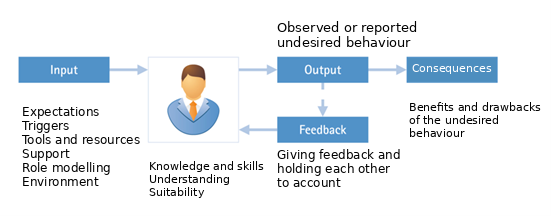
Figure 2. Focus Areas in Human Factors Analysis
Reporting
A good incident report makes the analysis understandable to everyone who can learn from it or needs to make decisions based on it. It describes what happened and explains how the team reached its conclusions. It makes clear which facts were established, which assumptions were made, what causes were identified and which measures follow from them. The report supports decisions, learning and follow-through.
Match the format and level of detail to the severity and complexity of the incident. A brief report noting the facts, immediate cause, measure and action owner may be enough for a minor deviation or a low-risk incident. A serious incident, a high-potential incident or an event with unclear causes calls for a more detailed report. Include the scope, investigation question, methods, timeline, evidence, causal analysis, barrier analysis, conclusions, improvement measures and follow-up. The potential severity of the incident is at least as important as the actual outcome.
Suggested Contents for a Detailed Incident Report
- Reason for the investigation and incident classification
- Scope, investigation question and investigation team
- Analysis method used
- Summary of findings and timeline
- Description of how the incident unfolded
- Immediate causes, underlying causes and contributing conditions
- Failed or missing barriers
- Improvement measures considered and selected
- Action owners, deadlines and arrangements for embedding the measures
- How effectiveness will be monitored
- Appendices containing relevant data, photos, interviews or technical information
Visuals are a valuable complement to a written report. Incidents often involve many connected events, conditions, decisions, causes, barriers, hypotheses and measures. These relationships can be hard to follow in prose. CoThink Event Mapping shows the full sequence of events and the analysis visually. It shows what happened in what order, which factors contributed, where barriers were missing or failed, and where measures can intervene.
Event Mapping connects analysis, decision-making and communication. A single map can show the events and causes alongside the measures considered, selected and ultimately implemented. This makes it clear which options the team considered, why it selected certain measures and how they relate to specific causes or failed barriers. The report is more transparent, easier to discuss and easier to use in meetings, team debriefs, audits and lessons-learned sessions.
A good report closes with a plan that others can verify. It sets out what happened, why it could happen, what the organisation will do about it and how it will confirm that the risk is better controlled. This makes reporting an essential part of learning and lasting improvement.
Embedding Learning Across the Organisation
Incident analysis delivers its full value when the insights reach beyond the investigation report and the department directly involved. Many organisations document lessons after an incident. The crucial question is whether those lessons are put into practice. Learning means using individual cases to identify wider patterns, using conclusions to change working practices and using improvement measures to demonstrate stronger risk management.
Review incidents together as well as individually. A single incident can offer useful insights, while a series of incidents, near misses and unsafe conditions often reveals recurring themes. Look for patterns in work preparation, handovers, maintenance, training, planning, supervision, contractor management or barrier performance. Regular trend analysis helps identify systemic vulnerabilities that are harder to see in individual reports.
Embedding improvements means making them part of how the organisation works. This may involve updating procedures, clarifying roles and responsibilities, changing technical standards, updating training programmes, strengthening audits or revisiting risk analyses such as a HAZOP or FMECA. Incorporate the findings directly into the management system.
Reporting back to staff is essential. People involved in the investigation should be able to see how their input was used and what improvements resulted. This builds trust and makes people more willing to report future deviations or weak signals and contribute their expertise. Communicate honestly and concretely, in terms people recognise from their own work. Share what happened, what the organisation learned and what will change.
Governance Roles and Independence
A thorough safety incident analysis calls for clear governance. Establish from the start who commissions the investigation, who facilitates it, who contributes subject-matter expertise and who decides on measures. This gives the investigation direction, helps build support for its conclusions and minimises the risk of competing interests influencing the analysis. For serious or sensitive incidents, the investigation must be rigorous and conducted independently and transparently.
The
CoThink approach assigns three distinct roles to the problem owner, the independent facilitator and the experts. The problem owner is accountable for the incident and has the authority to decide on scope, priorities, resources and follow-up. For safety incidents, this may be a line, operations or plant manager. The problem owner ensures that the investigation receives proper attention and that improvement measures can be implemented.
The facilitator oversees the analysis process. Ideally, the facilitator is independent of the incident, the department involved and the outcome of the investigation. The facilitator asks the right questions, applies the method, helps distinguish facts from assumptions, guards against premature conclusions and keeps the analysis coherent. This independence matters because the facilitator needs to be able to probe freely, even when the analysis points to organisational factors, management decisions, competing priorities or shortcomings in existing controls.
Experts provide the technical and practical knowledge needed to understand the incident. They may include operators, technicians, engineers, HSE specialists, process specialists, maintenance experts, contractors, suppliers and others involved. They contribute facts, context, explanations and practical experience. Combining their perspectives is important. An approach that seems logical to management may work differently in practice. Arrangements that look sound on paper may prove vulnerable in everyday operations.
Assigning these roles explicitly improves the quality and reliability of the analysis and builds mutual trust. If the problem owner also facilitates the analysis, organisational causes may receive less scrutiny. If experts draw conclusions about their own area of work, blind spots can arise. If the facilitator lacks authority or independence, the analysis may end with superficial conclusions that avoid difficult issues. Clear roles give each person a defined contribution. The problem owner makes sure decisions are made, the facilitator safeguards the process and the experts ensure the analysis is technically sound.
Set clear lines of authority and escalation. The investigation team needs access to relevant information, the ability to speak with those involved and the freedom to report findings without filtering. Specify who decides on changes to scope, additional expertise, temporary controls and final improvement measures. Serious incidents may require greater independence, for example through an external facilitator.
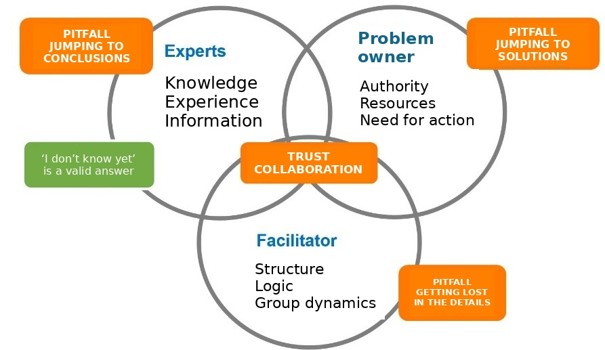 Figure 3
. Roles in Conducting an Analysis
Good governance gives learning, accountability and assessment distinct purposes. A safety incident investigation is primarily intended to understand what happened and improve safety. That purpose can come under pressure when legal, disciplinary or reputational concerns take precedence. Defining roles, authority and independence in advance gives the team room to examine honestly what happened, why it could happen and what the organisation can change to prevent recurrence.
Conclusion
Analysing a safety incident gives the organisation a chance to understand the system in which it occurred. Careful reconstruction of the facts, examination of human actions in context, scrutiny of barriers and a clear link between measures and causes are what make the analysis a source of learning. Organisations that take this approach strengthen their risk controls, build trust and openness, and improve their ability to learn. Even an unwanted event can help an organisation work more safely and sustainably, with care for people and the environment.